
Signed in as:
filler@godaddy.com
Leading an operation is more than managing schedules, enforcing expectations, or delivering training. It is creating the conditions where people can make good decisions, take ownership, learn from experience, and perform well when it matters most.
This page is built for leaders and managers who want to strengthen not only what their teams do, but how their teams think, adapt, communicate, and grow.
Develop people who can think, adapt, communicate, and make sound decisions—not simply follow instructions.
Help your team understand what matters most, what good performance looks like, and how their role contributes to the operation.
Use coaching, feedback, systems, and intentional leadership to turn expectations into consistent everyday performance.

Build stronger supervisors, leads, and emerging managers by developing the skills they need to communicate, coach, make decisions, and lead others effectively.
Strengthen consistency, ownership, accountability, and follow-through by creating clearer expectations and better systems for supporting performance.
Create a team environment where people communicate well, support one another, speak up, and understand how their individual actions contribute to the whole operation.
Move beyond simply delivering information. Create training experiences that help people think, practice, retain, and apply what they learn in real operational settings.
Use observation, feedback, questions, and meaningful conversations to help people recognize strengths, address performance gaps, and continue improving.
Strengthen your own self-awareness, communication, decision-making, adaptability, and ability to lead intentionally through both everyday challenges and change.
Take a closer look at how your operation is performing across leadership, staff readiness, systems, safety, and day-to-day execution so you can identify strengths, gaps, and opportunities for improvement.
Use observations, everyday challenges, near misses, and normal operations as opportunities to better understand how work actually happens—and turn those insights into meaningful improvement. Explore more.

In aquatics, leadership often starts long before someone has "lead" or “manager” in their title. A strong lifeguard, dispatcher, instructor, or lead may already be influencing others, solving problems, and shaping culture. The opportunity is to develop those skills intentionally before the role becomes bigger.
Leadership development should build more than knowledge. It should build judgment, communication, ownership, confidence, and the ability to help others perform well.
Explore: Leadership Online Training Opportunities
Explore: AQXLeader Courses 101-501
Explore: Starting Point - Onboarding for Aquatics Leaders
Explore: On Point Self Assessment
Explore: Dispatch SMART program

Instead of only teaching policies and procedures, develop leaders who can:
The goal is not just to prepare someone to supervise a shift. It is to prepare them to lead people, make decisions, and strengthen the operation around them.
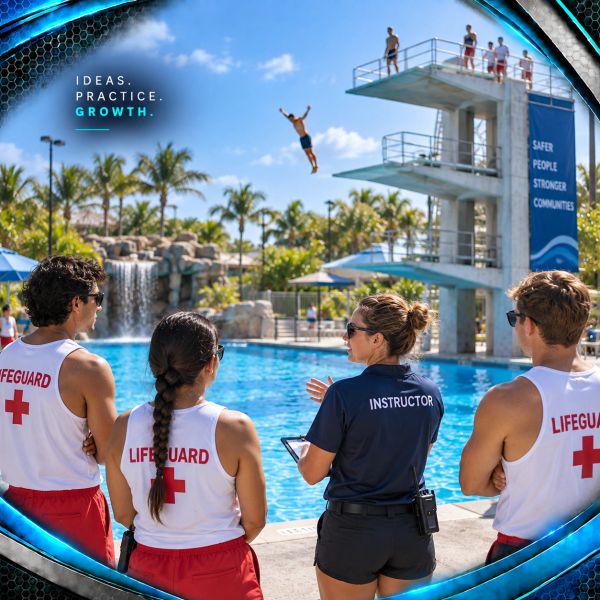
Leadership Training Activities
Practical activities, exercises, team-building ideas, and leadership development tools that can be used during meetings, in-services, supervisor trainings, and leadership retreats.
A deeper leadership-development pathway focused on helping aquatic professionals strengthen the skills, perspective, and confidence needed to lead effectively.
Leadership SMART - Coming Soon
A future development experience focused on the human side of leadership—attention, decision-making, communication, coaching, ownership, and performance.
Starting Point
A 30-day onboarding guide designed to help new aquatics managers understand their operation, establish priorities, build relationships, and start leading with greater clarity.
iLEADER - Coming Soon
Customizable leadership training. Complete focused leadership training designed to let you choose your content and activities.
ROPES Leadership Training
On-site, interactive leadership development designed to strengthen communication, teamwork, trust, problem-solving, and leadership through shared experience.

Developing strong leaders takes more than promoting capable employees and hoping they grow into the role.
Leadership development often breaks down not because organizations don’t care about their people, but because they make assumptions about what leadership looks like, who is ready, and how leadership skills are actually built.
Some of the most common mistakes happen when we confuse experience with leadership ability, technical performance with people leadership, or a new title with actual preparation. Here are 8 common Leadership Development mistakes we see often...
Leadership development is not about creating one “right” kind of leader. It is about helping people understand their strengths, expand their capabilities, and learn how to lead others more intentionally.

When performance falls short, it is easy to focus immediately on the person involved. But behavior is shaped by much more than motivation or attitude.
Expectations, training, supervision, workload, staffing, equipment, competing priorities, and the physical environment can all influence how work gets done. Strong leaders step back and ask what is shaping performance before deciding how to fix it.
That broader view helps leaders avoid repeatedly correcting the same issue without addressing the conditions that keep producing it.
On Point and ARROW can help identify patterns, disconnects, and system-level opportunities that may not be obvious from day-to-day observation alone.
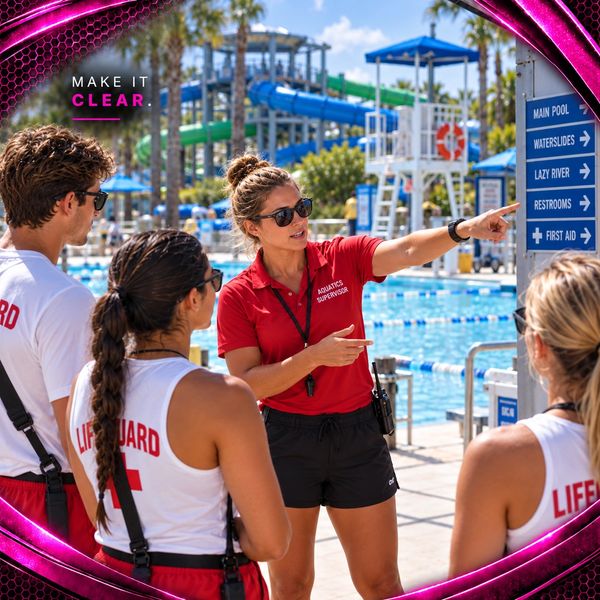
People perform more consistently when they know exactly what good performance looks like.
Clear expectations go beyond policies and procedures. They help staff understand what matters most, what success looks like in practice, how their performance will be observed, and what they are responsible for contributing to the team.
Leaders should also check for consistency: if three supervisors were asked to describe the expectation, would they all give the same answer?
The clearer the standard, the easier it becomes to coach, recognize strong performance, and address gaps fairly.
Clarity comes before accountability.

Accountability works best when it is consistent, visible, applied at all levels, and connected to expectations.
If recognition, feedback, and follow-through depend entirely on who is supervising that day, staff receive mixed messages about what really matters. Strong systems help leadership teams respond more consistently and reduce the chance that performance management becomes reactive or personal.
Accountability should include both sides of performance: reinforcing what is going well and addressing what needs to improve.
That is the purpose behind Performance Management Systems for Leaders—giving supervisors practical tools to create structure around recognition, feedback, documentation, and follow-through.
Includes:
Bead Program • Point System • Rising Star • Leadership Log • Accountability Circle

Sometimes leaders invest more time in training, reminders, meetings, and corrective conversations—and still see the same performance problems.
When that happens, the issue may not be effort. It may be that the real barrier has not been identified. Here are 9 reasons why your staff performance may not be improving:
The expectation is not as clear as you think
A rule may have been explained, but staff may still have different interpretations of what good performance actually looks like.
Training delivered information, but not enough practice
Knowing the correct action is different from being able to perform it consistently during real work.
Feedback comes too late
When staff only hear about performance during formal evaluations or after something goes wrong, the opportunity for real-time learning is lost.
Supervisors are reinforcing different standards
If one leader corrects a behavior and another ignores it, the team learns that the expectation is optional.
Good performance goes unnoticed
When leaders only respond to mistakes, they miss opportunities to reinforce the behaviors they want repeated.
Accountability is inconsistent
Expectations lose credibility when follow-through depends on the person, the shift, or the supervisor.
The environment is working against the expectation
Staffing, layout, equipment, workload, guest pressure, or competing priorities may make the desired behavior harder than leadership realizes.
You may be retraining the wrong problem
More training will not fix a gap caused by unclear expectations, weak systems, conflicting priorities, or inconsistent leadership.
There is some advantage or benefit
There may be a reason you cant see. There may be an underlying advantage, benefit, or hidden motive or agenda.
Before asking, “Why won’t they do it?” ask, “What is shaping the way this work is being performed?”
Improving performance starts with diagnosing the right problem.

Culture is not your mission statement, staff party, or the words printed on a breakroom wall. It is what people learn is normal around here.
Culture is built through everyday signals: what leaders pay attention to, what gets recognized, what gets ignored, how people respond when someone speaks up, and what happens when expectations are missed.
You can say "safety matters", but if speed is consistently rewarded more than doing the job well, staff notice. You can say "questions are welcome", but if people feel embarrassed for asking them, they stop asking.
Culture is shaped less by what we announce and more by what we repeatedly reinforce.
Culture IS:
How we communicate • What we reinforce • How we respond • What we tolerate • How we treat people • How work actually feels
Culture ISN’T:
A slogan • A pizza party • One team-building event • Something HR owns • Something leadership can declare into existence
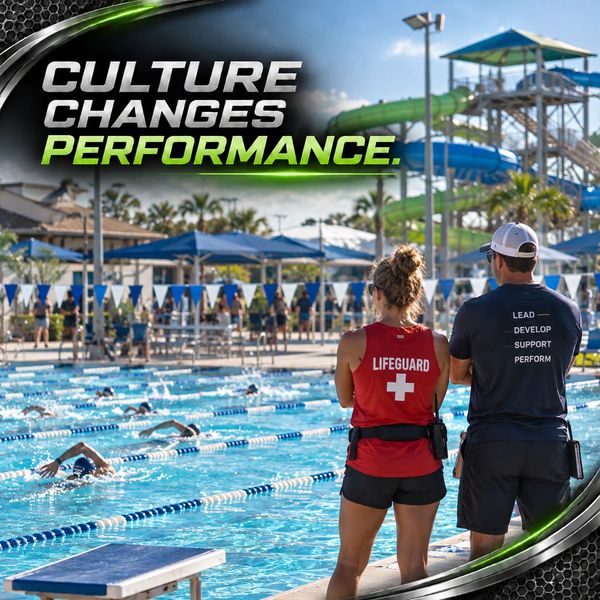
Culture is not the "soft stuff". It shows up in the work.
Strong teams are more likely to communicate, help one another, raise concerns, take ownership, and stay engaged in what they are doing.
There is substantial workplace research connecting employee engagement—the conditions people experience within their teams—to measurable performance outcomes. Gallup’s 2024 meta-analysis included more than 183,000 business/work units across 53 industries and 90 countries. Compared with bottom-quartile teams, highly engaged top-quartile teams had 14% higher production productivity, 23% higher profitability, 63% fewer safety incidents, and 78% less absenteeism. The study shows association across work units rather than proving that “culture” alone caused those differences, but it reinforces an important point: the environment people work within matters to performance.
For operations, that matters because much of the work is interconnected. One person's willingness to communicate, notice something changing, support another staff member, or raise a concern can affect the entire operation.
Culture eventually becomes performance because culture influences what people do when no one is telling them what to do.
Explore: Performance Management Systems for Leaders
Explore: Operational Themes
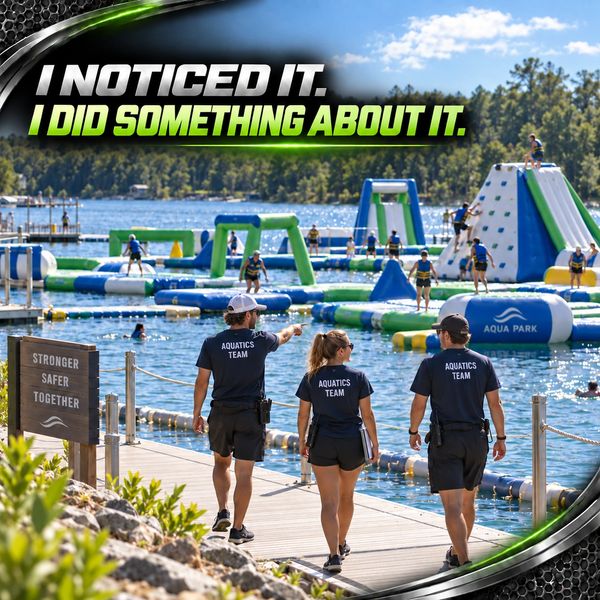
Culture is not something leadership creates and employees simply receive. Everyone contributes to what becomes normal.
Strong teams take shared ownership of how they communicate, respond, support one another, and perform.
Speak Up
Create an environment where concerns, questions, and observations are treated as contributions—not problems.
Stay Curious
Ask what happened, what influenced the decision, and what can be learned before jumping to blame.
Take Ownership
Help people understand that their actions affect more than their own task—they influence the performance of the whole operation.
Practice Accountability
Healthy cultures combine openness with clear expectations, feedback, and consistent follow-through.
Ownership sounds like: “I noticed it. I said something. I helped. I followed through.”
Leadership + Team Development Training Resources
Explore: Performance Management Systems for Leaders
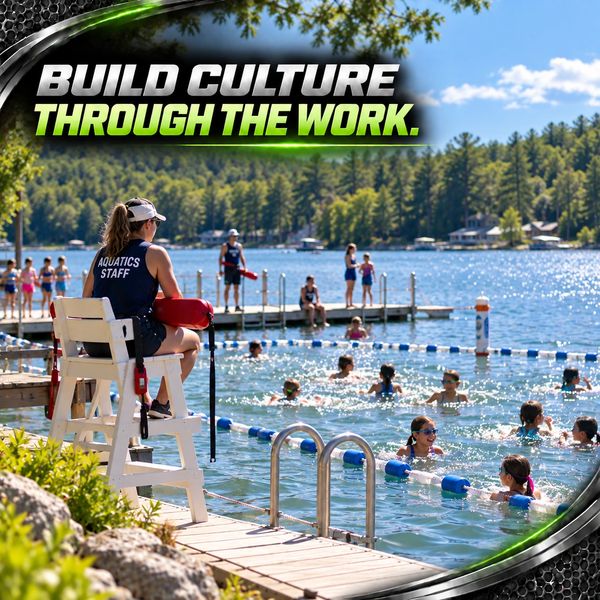
The strongest cultures are built into the ordinary rhythm of the operation, not saved for retreats or the beginning-of-season kickoff.
Use the moments you already have:
Crew Meetings
Create regular opportunities to communicate priorities, recognize performance, surface challenges, and strengthen connection.
Rookie School
Introduce expectations, language, team norms, and what it means to be part of the operation from the beginning.
Operational Themes
Give teams a shared focus and language around the behaviors and operational ideas that matter.
Leadership + Team Development Activities
Practice communication, problem-solving, trust, leadership, and teamwork rather than only talking about them.
Team Building + Ice Breakers
Use intentionally—not just for fun, but to build familiarity, communication, and connection that can carry into the work.
Explore our related resources:
Don't add culture to the work. Build culture through the work.
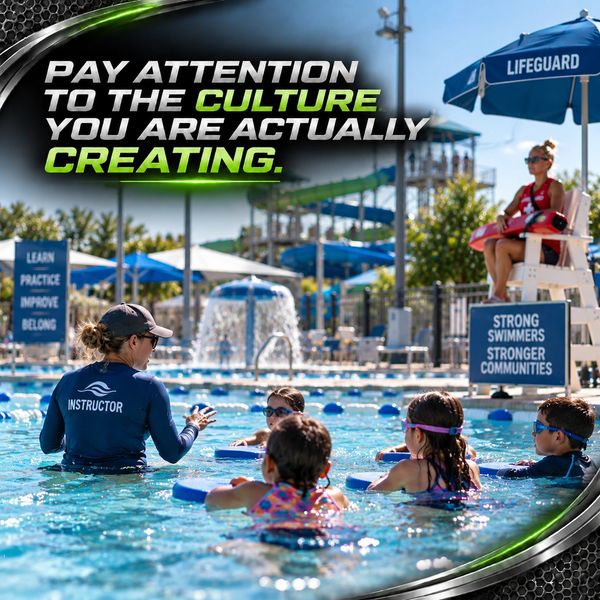
Your Intended Culture and Your Experience Culture may not be the same.
Leaders often judge culture by what they intended to create.
Employees experience culture through what actually happens.
You say:
“Speak up.”
But what happens when someone challenges a supervisor?
You say:
“We are a team.”
But do departments help one another when things get busy?
You say:
“Safety comes first.”
But what happens when doing something correctly slows the operation down?
You say:
“We want people to grow.”
But do leaders actually coach, delegate, and give people opportunities to stretch?
You say:
“Mistakes are learning opportunities.”
But what is the first reaction when someone admits one?
Then I would land here:
Culture is revealed most clearly when expectations compete, pressure increases, or something doesn't go as planned.
What gets rewarded here?
What do people avoid talking about?
What happens when someone makes a mistake?
What behavior gets tolerated even though everyone knows it shouldn't?
What makes someone feel like they truly belong on this team?
Want to start with an assessment? Explore On Point or ARROW.
Training is not successful because it was completed. It is successful when it changes what people are capable of doing.
Effective training goes beyond memorizing procedures. It helps people think, adapt, and perform when conditions are imperfect or unfamiliar.
Strong training:
Completion is not the goal. Capability is.
The real question is not, “Did we train them?” It is, “Are they better prepared to perform?”

Strong trainers and leaders keep learning too. The more ideas, perspectives, and tools you are exposed to, the more effectively you can adapt training to different people, situations, and operational challenges.
Use the resources below to refresh what you already do well, challenge familiar routines, and add new approaches to your training toolbox.
Don’t just collect ideas—use one.
Choose one resource from this section, test something new with your team, and pay attention to what changes. What did people engage with? What helped them think differently? What should you keep, adjust, or try again?
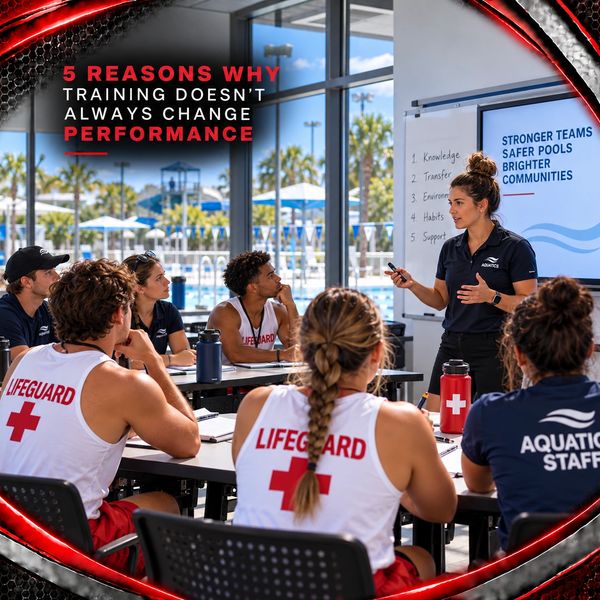
Too Much Information, Not Enough Practice
People need opportunities to apply information, not just hear it.
Training Doesn’t Look Like the Real Work
If practice is too controlled or predictable, transfer to real conditions becomes harder.
Feedback Comes Too Late
Immediate coaching helps people connect actions with outcomes while the experience is still fresh.
Everyone Gets the Same Training for Different Problems
A knowledge gap, skill gap, judgment gap, and system problem do not require the same solution.
Training Ends When the Session Ends
Skills weaken when leaders do not observe, reinforce, coach, and revisit them during normal work.
Sometimes the answer is better training. Sometimes the answer is understanding why the training isn’t transferring.
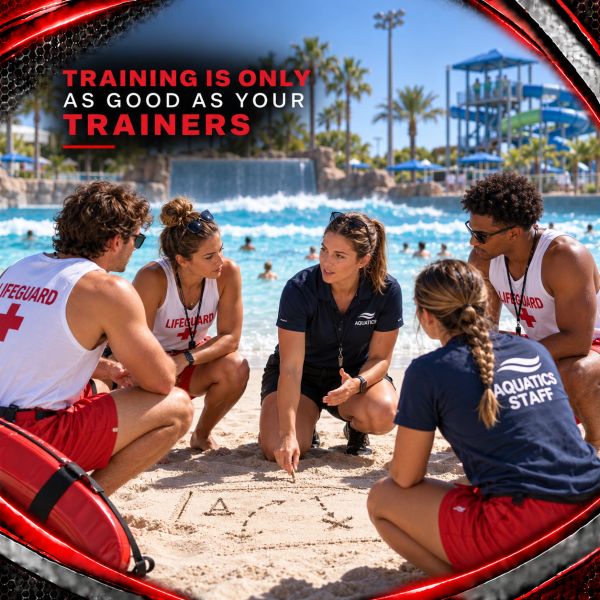
Great content can still fall flat without strong facilitation.
Develop instructors and in-service leaders who can:
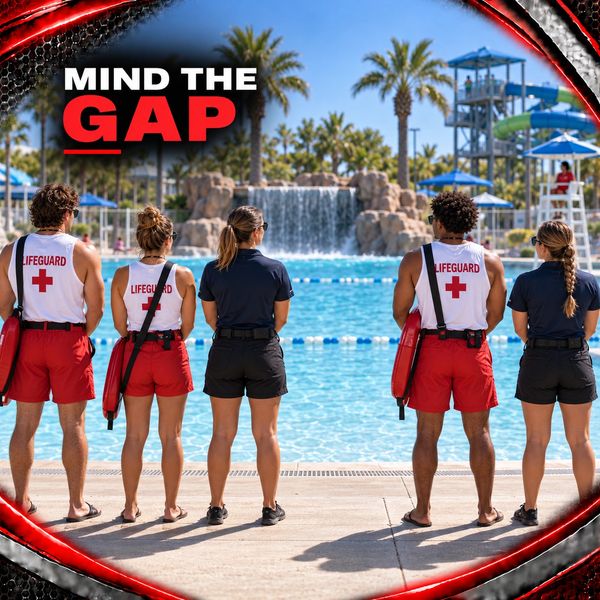
Aquatics organizations often invest heavily in certification and initial training, but some of the biggest performance gaps happen after the course ends. The issue is not always a lack of training—it is often a lack of transfer, reinforcement, site-specific application, or continued development.
Here are 8 training gaps we often see to consider:
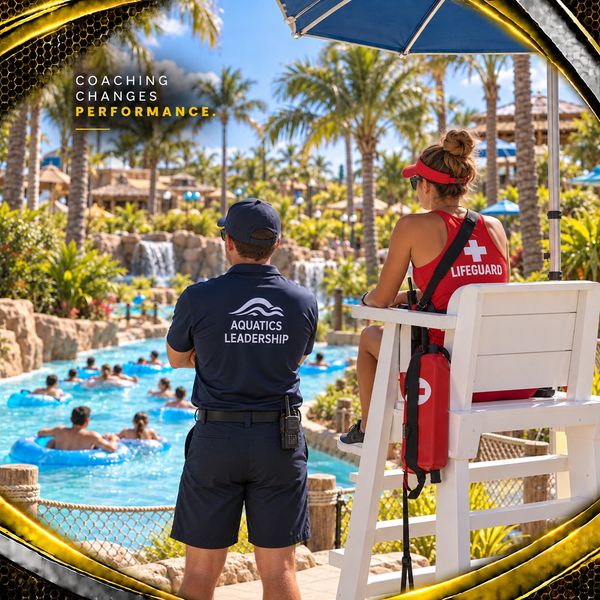
Good coaching does more than correct mistakes. It helps people see what they may not see on their own, understand why it matters, and improve what they do next.
Effective coaches:
Coaching is not about having all the answers. It is about helping people think, learn, and perform better.

This is where your Human Performance and leadership resources fit naturally.
Even strong leaders can develop blind spots, habits, and patterns that limit how effectively they coach others. The best coaches continue developing their own awareness, communication, flexibility, and decision-making.
Explore:
Human Performance Coaching • AQXLeader • Leadership + Management Trainings • ALIVE Assessments • Leadership + Team Development Ideas • Dispatch Training Programs
The better you understand yourself, the better you can lead and coach someone else.
The best coaches are not experts in everything—and they do not try to be.
High-performing teams (think NFL systems)use specialists, systems, data, and outside perspectives to strengthen areas that require deeper expertise. Aquatics and Operations leaders can do the same.
Use the right resource for the right challenge:
Strong leaders know when to coach directly—and when to bring in a better tool, system, or expert.
Two employees can make the same mistake for completely different reasons. One may need clarity, another practice, another confidence, another accountability, and another may be working within a system that makes success harder.
Effective coaching starts by understanding what is actually driving the performance before deciding how to respond.
The same correction will not solve every performance problem.
You cannot improve what you do not notice.
Strong leaders pay attention to more than outcomes. They notice their own habits, reactions, communication patterns, blind spots, and the effect they have on the people around them.
Growth starts by asking:
Self-awareness turns experience into growth.
Explore:
Human Performance Coaching, Leadership Online Courses, our assessment options, and explore becoming a Dispatch SMART Certified Operator (DSCO)

Leadership development is not about fixing everything that is “wrong” with you. It is about understanding your strengths, recognizing where they help, and noticing where those same strengths can become limiting.
For example:
Decisive can become dismissive.
Supportive can become avoidant.
Detail-oriented can become controlling.
Confident can become closed off.
Independent can become disconnected.
The goal is not to become a different person. It is to become more intentional about how you use what you already bring.
Explore: Our On Point self assessment tool or ARROW comprehensive assessment

Many leaders spend most of their time developing everyone else and very little time developing themselves and expanding their own tools and knowledge.
Your own leadership should still be challenged, stretched, and refined.
Consider these resources:
Experienced does not mean finished.
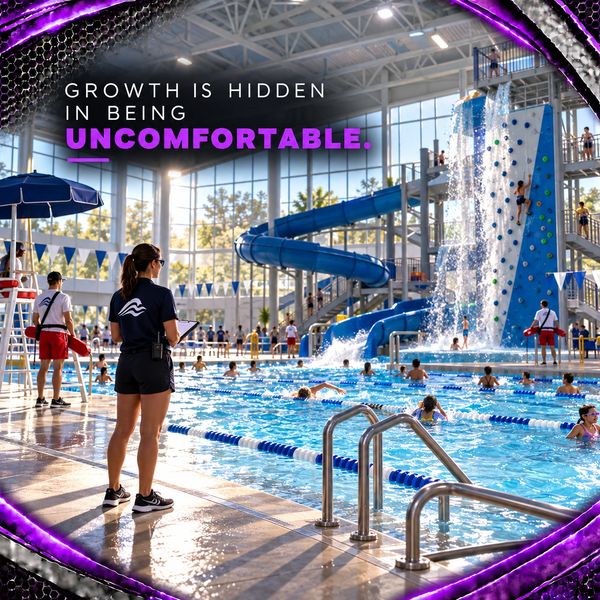
Leadership development doesn't have to be complicated, it just needs to start with intention. Pick something on this list and go from there...
Ask for feedback.
Ask one person you trust what you do that helps the team—and what you could do differently.
Reflect after difficult moments.
Instead of asking only whether the outcome was good, ask how you showed up as a leader.
Notice your patterns.
Pay attention to the situations where you become impatient, quiet, defensive, controlling, or overly accommodating.
Learn outside your usual lane.
Read, listen, observe, or learn from leaders outside aquatics and bring new thinking back to your operation.
Practice one skill at a time.
Choose something specific—listening, delegation, feedback, coaching, decision-making—and intentionally work on it.
Spend time closer to the work.
Stay connected to what staff actually experience instead of leading only through reports, meetings, and assumptions. Go get back in the chair!
Find people who challenge you.
Surround yourself with peers, mentors, coaches, and experts who will expand your thinking rather than simply agree with you.
Keep stretching.
Take on something that makes you think differently, communicate differently, or lead at a higher level.
Keep a journal.
Write down what you are trying, what you are learning, what you are focusing on. Keep it up for a little while and see what happens!
Do something different.
It is easy to get stuck in one way of doing things, but that is how we stop learning. Pick something and intentionally do it differently.
Intentionally challenge yourself.
Time to get comfortable being uncomfortable. Find something you rely on others to do, or don't know how to do and learn it. Practice sucking at something new!
Leadership growth does not happen because you have more years of experience. It happens when you keep paying attention, reflecting, practicing, and learning.
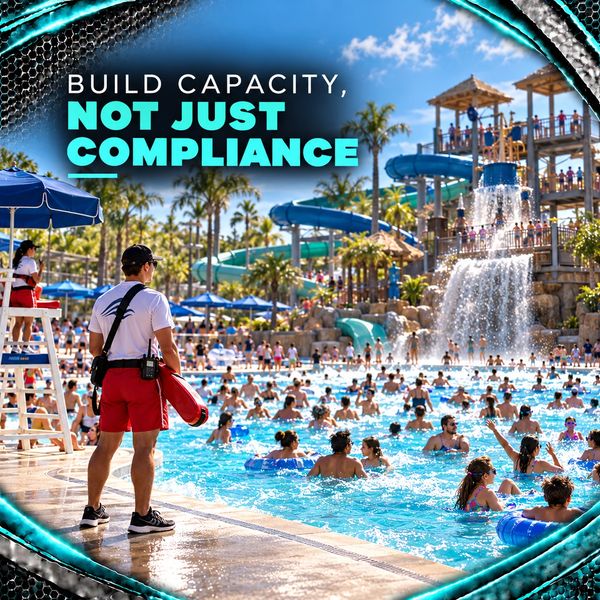
Reducing risk is not only about adding more rules, inspections, or checklists. Strong operations build the capacity to notice, adapt, communicate, recover, and respond when conditions change.
That means strengthening the people and systems around the work so the operation is better prepared for both expected demands and unexpected situations.
Safety is not only the absence of failure. It is the presence of capacity.
Explore ways in increase capacity:
ARROW Assessment
On Point self-assessment
Dispatch programs
Online Trainings + Courses

Aquatic operations depend on people—employees making decisions and guests behaving in ways that are not always predictable.
Fatigue, distraction, workload, assumptions, communication, experience, environmental conditions, social pressure, and competing priorities can all shape performance.
Effective risk reduction asks:

This becomes one important risk-reduction strategy rather than its own full pathway.
Incidents and near misses matter—but they are not the only opportunities to learn.
Normal operations can show leaders where staff adapt, where procedures do not match reality, where workarounds appear, where conditions create pressure, and where small improvements could prevent larger problems later.
Do not wait for something to go wrong before asking what the work can teach you.
Useful practices could include observations, staff conversations, debriefs, operational walkthroughs, reviewing recurring friction points, and comparing work-as-imagined with work-as-done.
Explore:
Learning From Normal Work online class
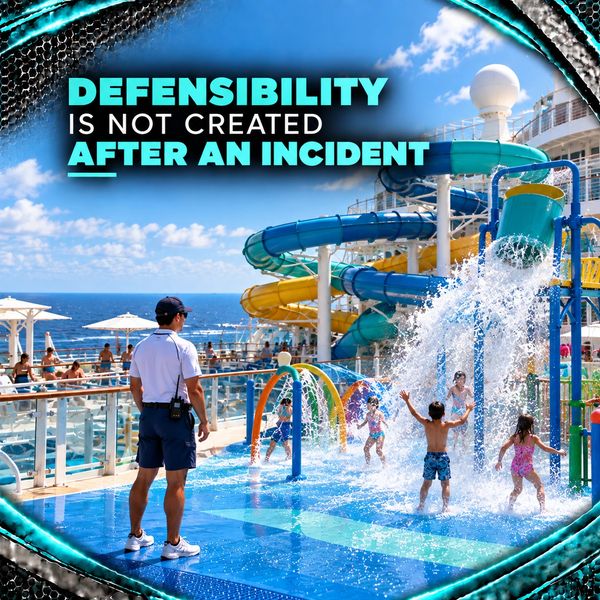
A strong operation should not only perform well—it should be able to show how it manages risk.
Clear expectations, documented training, consistent supervision, inspections, maintenance records, incident response, follow-up, and evidence of continual improvement all help strengthen both operational safety and defensibility.
Defensibility is not created after an incident. It is built through the quality and consistency of everyday operations.
Defensibility is the record of a system that was intentionally designed, supported, monitored, and improved.
If you can't prove it...did it even happen?
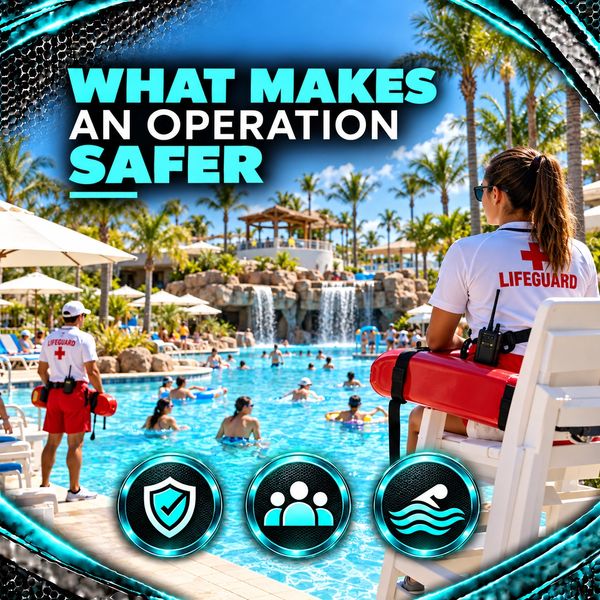
Safer operations are not created by one policy, one training, or one inspection. They are built through the layered everyday conditions that help people notice, decide, communicate, and respond well.
Safer operations are designed to create capacity—not simply to prevent mistakes.
Stay connected with ALIVE Connections, our monthly newsletter featuring fresh ideas, practical resources, timely articles, and more. Sign up here!
Explore our Blog Posts and some longer form articles from our newsletters. Check it out here.
Explore what we are learning, thinking about, testing, and more...