ALIVE Solutions
ALIVE Solutions
  • Home
  • About
  • Services
  • Education
  • START HERE
    • OPERATIONS
    • WATER SAFETY
    • AQUATICS EXPERT
    • LEADERSHIP + MANAGEMENT
  • More
    • Home
    • About
    • Services
    • Education
    • START HERE
      • OPERATIONS
      • WATER SAFETY
      • AQUATICS EXPERT
      • LEADERSHIP + MANAGEMENT
  • Sign In
  • Create Account

  • My Account
  • Signed in as:

  • filler@godaddy.com


  • My Account
  • Sign out


Signed in as:

filler@godaddy.com

  • Home
  • About
  • Services
  • Education
  • START HERE
    • OPERATIONS
    • WATER SAFETY
    • AQUATICS EXPERT
    • LEADERSHIP + MANAGEMENT

Account


  • My Account
  • Sign out


  • Sign In
  • My Account

ALIVE Industry Insights

The goal isn’t simply to know more. It’s to see more clearly.

The aquatic industry is shaped by more than standards, policies, and procedures. Meaningful improvement comes from looking closely at what is happening in real operations, understanding why it is happening, and learning from the patterns that emerge.


Industry Insights brings together observations from the field, lessons from litigation, common assumptions worth challenging, emerging industry topics, and research designed to help aquatic leaders think more critically about performance, risk, and improvement.

Browse Insights...

LESSONS

Practical takeaways from real operations, field observations, incidents, and litigation.

PERSPECTIVE

Ideas that challenge common assumptions and encourage a different way of thinking about safety and performance.

Research

Industry trends, data, reports, and emerging topics worth understanding and watching.

browse insights...

Myths vs. Reality

Lessons from Litigation

Lessons from the Field

Lessons from the Field

Lessons from Litigation

Lessons from the Field

Lessons from Litigation

Lessons from Litigation

industry reports + benchmarks

industry reports + benchmarks

industry reports + benchmarks

industry reports + benchmarks

what we are watching

industry reports + benchmarks

what we are watching

blog articles

industry reports + benchmarks

what we are watching

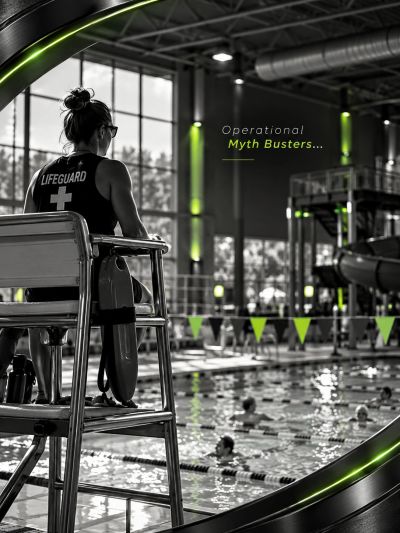
Myth vs. Reality

Some of the most persistent operational problems are reinforced by assumptions that sound reasonable, but don’t always hold up in real work. These myths are worth challenging because how leaders think about performance shapes how they train, supervise, investigate, and improve. Consider these 10 myths...

MYTH #1: If nothing bad happened, the operation was successful.
REALITY: The absence of an incident does not necessarily mean the system was strong. Sometimes people compensate, conditions happen to align, or weaknesses simply aren’t exposed.
THINK ABOUT THIS: Look for evidence of capacity, resilience, and reliable performance—not only the absence of negative outcomes.

MYTH #2: More rules create safer operations.
REALITY: Rules can define expectations, but safe performance also depends on staffing, supervision, training, equipment, workload, communication, and whether the system actually supports the behavior being asked for.
THINK ABOUT THIS: Before adding another rule, ask what made the existing expectation difficult to meet.

MYTH #3: If employees know the procedure, they will follow it.
REALITY: Knowing what to do and being able to do it consistently under real operating conditions are different things.
THINK ABOUT THIS: Look beyond knowledge checks and ask whether staff have enough practice, feedback, clarity, and operational capacity.

MYTH #4: An incident means someone made a bad decision.
REALITY: A decision that looks obvious afterward may have made sense based on the information, pressures, priorities, and conditions present at the time.
THINK ABOUT THIS: Investigate the context around the decision, not just the decision itself.

MYTH #5: The employee who broke the rule is the problem.
REALITY: A deviation may be a clue that the procedure, workflow, staffing model, expectations, or operating environment deserves closer examination.
THINK ABOUT THIS: Ask what problem the employee may have been trying to solve.

MYTH #6: Passing an inspection means the operation is performing well.
REALITY: Inspections provide a snapshot. Strong operations perform reliably across different people, times, workloads, and conditions. Some operations cater to audits, so they don't provide a true reflection of the work being done.
THINK ABOUT THIS: Challenge the why behind the audit. Work with people who understand these pressures. Supplement inspections with observation of normal work, coaching, data, and follow-up.

MYTH #7: More training will fix poor performance.
REALITY: Training only addresses some performance problems. Sometimes the issue is unclear expectations, poor system design, conflicting priorities, weak supervision, inadequate tools, or lack of reinforcement.
THINK ABOUT THIS: Diagnose before prescribing training.

MYTH #8: Your best employees prove the system works.
REALITY: Highly capable employees can compensate for weak systems, unclear procedures, or operational gaps that less experienced staff cannot.
THINK ABOUT THIS: Ask whether average employees can succeed consistently—not just your strongest ones.

MYTH #9: Experienced staff need less supervision and coaching.
REALITY: Experience can improve judgment and confidence, but it can also create habits, shortcuts, normalization, and blind spots.
THINK ABOUT THIS: Coaching should evolve with experience, not disappear.

MYTH #10: Accountability means correcting people when they fail.
REALITY: Effective accountability starts much earlier—with clear expectations, feedback, ownership, follow-through, and systems that make good performance easier to achieve.
THINK ABOUT THIS: Build accountability into the operation instead of waiting for something to go wrong.

Lessons From the Field

What real operations teach us when we pay attention.

Site visits, assessments, training, observations, and everyday work often reveal more than a checklist ever could. These lessons focus on the patterns, adaptations, leadership behaviors, and operational conditions that shape performance in the real world.

Here are 13 strong lessons from our time this year to consider:

  • The Work Done Is Often Different From the Work Imagined
    Written procedures describe how work is supposed to happen, but real operations are shaped by staffing, workload, equipment, communication, and competing priorities. The gap between the SOP and actual work is often where the most important learning lives. 
  • Leaders Who Can’t Prioritize Are Ineffective
    Everything cannot be urgent, and everything cannot receive equal attention. Strong leaders create clarity around what matters most and help their teams focus time, energy, and resources accordingly. Prioritization isn't be taught or reinforced.
  • Supervision Should Change Frontline Performance
    If supervision has no visible impact on how employees perform, communicate, or respond, it may not actually be supervision. Effective supervisors observe, coach, reinforce expectations, and influence what becomes normal. 
  • Dispatch Is a System, Not a Person
    Dispatcher performance is shaped by training, staffing, attraction design, rider behavior, procedures, communication, supervision, and operational expectations. Focusing only on the individual misses the system influencing the work. 
  • Documentation Is Working Against Us
    More documentation does not automatically mean better operations. Digital systems can create enormous amounts of information that is incomplete, inconsistent, disconnected, or never reviewed—turning documentation into administrative noise instead of useful operational intelligence. Documentation should also demonstrate control, not just activity. 
  • Signage Needs to Be Reviewed
    More signs are not always better. Cluttered, outdated, inaccurate, poorly placed, or overly complicated signage can reduce effectiveness and create confusion for both guests and employees. We aren't nailing signage. 
  • Observation Should Create Learning, Not Just Scores
    Observation should help leaders understand why performance varies, identify patterns, and improve the system. A score without discussion, context, or follow-up leaves much of the value behind. And doing observations just to check a box without intent is a waste of time.
  • Performative Operations Are in Trouble
    Some operations look strongest when they know they are being watched. When teams prepare for audits, inspections, or leadership visits instead of building reliable everyday practices, the appearance of performance can hide serious weaknesses. 
  • Strong Employees Hide Gaps
    Your best people can compensate for weak systems, unclear expectations, poor processes, or ineffective leadership. Their success can make an operation appear stronger than it really is. 
  • Our People-Management Skills Need Work
    Many operational problems are leadership problems in disguise. Leaders often receive technical training without learning how to coach, give feedback, address conflict, set expectations, or have difficult conversations effectively. 
  • Where Is the Adult in the Room?
    Strong operations need someone who can create clarity, make decisions, establish authority, and move the work forward. This is not about age—it is about experience, judgment, knowledge, ownership, and leadership presence. So many operations don't have a real adult in charge.
  • Executive Leadership Without Aquatics Understanding Creates Real Problems
    Decisions made far from the pool deck can have major operational consequences. When executive leaders do not understand aquatic operations, staffing realities, training needs, or risk, priorities and resources can become disconnected from what the operation actually requires. 
  • There Isn’t Simply a Lifeguard Shortage
    Staffing challenges are real, but “there aren’t enough lifeguards” can oversimplify the problem. The majority of the problem lies in weak leadership, poor systems and support, weak culture, expectation gap, weak executive support, and other operational designs.  Many organizations and areas do not have a lifeguard shortage, so just saying "there aren't enough lifeguards" without digging deeper isn't going to give you the right answers or approach.  

Do you see any of these in your operation?

Lessons Learned From Litigation

What claims, lawsuits, and expert analysis can teach us before something goes wrong.

Litigation often exposes the difference between what an operation believed was happening and what the evidence ultimately showed. Across cases we have reviewed, the same themes appear again and again—training, dispatch, documentation, maintenance, rider requirements, supervision, and the ability to demonstrate that systems were actually working. (Want all the data and lessons - check out our complete report!)

Here are 8 lessons from our list:

  1. Documentation Needs to Tell the Operational Story
    Records are most useful when they show what was happening, what was identified, what was reviewed, and what actions followed. A completed form alone does not necessarily demonstrate that a risk was understood or managed. 
  2. Inspection Is Not the Same as Assurance
    A passed inspection or completed checklist does not prove that an attraction is performing safely under real operating conditions. Strong assurance looks at how equipment, people, procedures, and conditions interact over time. 
  3. Abnormal Rides and Near Misses Matter
    Unexpected rider behavior, unusual trajectories, recurring complaints, or other “almost” events can be early warning signals. Litigation often raises difficult questions about what an organization knew—or should have recognized—before a serious incident occurred. 
  4. Rider Requirements Need a Defensible Basis
    Height, weight, posture, vehicle loading, and other rider restrictions should be clear, consistently enforced, and grounded in manufacturer guidance, engineering, regulation, or another supportable source. 
  5. Dispatch Is an Operational Decision
    Dispatch is more than sending the next rider. Timing, spacing, rider readiness, attraction conditions, communication, and upstream/downstream activity all influence whether that decision is safe. 
  6. Manufacturer Information Has to Reach the Front Line
    Important operating limits, updates, maintenance information, and restrictions lose their value if they remain in manuals, engineering files, or management offices. The people operating the attraction need to understand the information that affects their work. 
  7. Training Records Do Not Prove Competency
    Documentation may establish that training occurred, but litigation often turns to what employees actually understood, practiced, remembered, and were capable of doing under real conditions. 
  8. Prior Incidents Change the Conversation
    Once an organization has evidence of recurring problems, injuries, unusual ride behavior, or operational concerns, expectations can change. The question becomes not only what happened this time, but what was learned and what the organization did in response. 

I’d probably end the section with a short bridge into the report:

Want the deeper analysis?
These are only a few of the recurring themes we identified. Our upcoming industry report takes a closer look at the cases, operational patterns, contributing factors, and broader lessons emerging from recent waterslide and aquatic litigation.


INDUSTRY REPORTS + BENCHMARKING

Data is most valuable when it helps us see something more clearly.

Our industry reports bring together operational data, field observations, research, and recurring patterns to provide a broader view of what is happening across aquatic operations.


The goal is not simply to collect information, but to help leaders understand where performance is strong, where gaps may exist, and how their own operation compares to the larger picture.

Through benchmarking, trend analysis, and focused research, these reports are designed to turn data into practical insight — helping organizations identify priorities, ask better questions, and make more informed decisions.


Explore the reports below for deeper analysis, industry benchmarks, and lessons you can apply to your own operation.

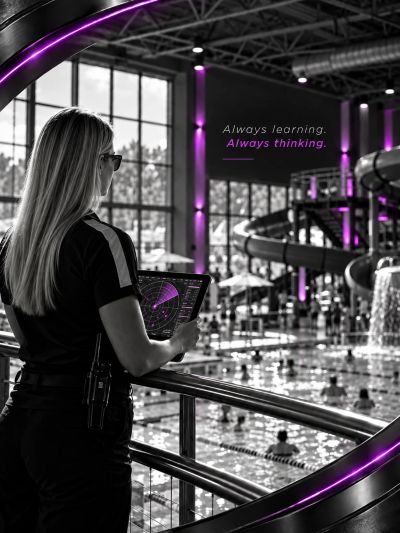
  • WATERSLIDE + ATTRACTIONS DISPATCH INDUSTRY REPORT - Coming NOV 2026! - Sign up for the email list today

What Are We Watching?

CURRENT THOUGHTS / FOCUS AREAS:

A few of the operational and leadership issues we believe deserve continued attention across the aquatic industry:

  • The Shift From Compliance to Performance
    More organizations are beginning to ask not just whether requirements were met, but whether the operation can perform reliably under real conditions. 
  • Human Performance + System Thinking
    There is growing interest in understanding how workload, environment, supervision, procedures, and system design shape employee performance. 
  • Operational Data That Actually Gets Used
    Facilities are collecting more information than ever. The real question is whether leaders are reviewing it, learning from it, and using it to make better decisions. 
  • The Quality of Frontline Supervision
    Strong frontline leadership continues to be one of the biggest differences between operations that simply function and those that consistently perform well. 
  • Executive Understanding of Aquatics
    Decisions about staffing, training, budgets, maintenance, and risk often happen above the pool deck. The level of aquatic understanding at the executive level has real operational consequences. 
  • Training Beyond Completion
    The industry is slowly moving toward stronger conversations about competency, coaching, practice, and ongoing performance—not just whether training was completed. 
  • Dispatch + Attraction Performance
    Waterslide and attraction operations are receiving more attention as complex systems that require judgment, communication, timing, and strong operational support. 
  • Learning From Normal Work
    There is increasing value in studying what happens every day—before an incident occurs—rather than relying only on accidents, audits, or formal reviews to identify weaknesses. 
  • AI + Technology in Aquatic Operations
    How emerging tools may influence training, documentation, incident review, communication, scheduling, and operational decision-making. 
  • Digital Documentation Overload
    More technology is creating more data, but not always better information. We’re watching whether digital systems actually improve learning or simply create larger piles of unchecked records. 
  • Video as an Operational Tool
    Video is increasingly useful for coaching, observation, training, incident review, and understanding normal work—not just for security or litigation.
  • The Coaching Gap
    Many organizations have supervisors, but far fewer have leaders who consistently coach. The ability to give feedback, correct performance, and develop people is becoming increasingly important. 
  • Decision Fatigue + Leadership Overload
    Leaders are being asked to manage more priorities, systems, reporting, staffing, and expectations. We’re watching how overload affects judgment, follow-through, and operational focus. 
  • Succession Planning + Leadership Pipelines
    Strong operations cannot depend on one or two experienced leaders. Developing the next layer of supervisors and managers is becoming a bigger operational priority. 
  • Culture Becoming More Intentional
    Organizations are paying more attention to the behaviors they reinforce, tolerate, and normalize—not just the values written on a wall. 
  • The Rise of Performance-Based Training
    More emphasis is shifting toward demonstration, practice, coaching, and competency rather than simple course completion. 
  • Better Use of Benchmarking
    Benchmarking is becoming more useful when it helps organizations understand variation and priorities, rather than simply compare scores. 
  • More Complex Attractions, Same Staffing Models
    Attractions are becoming more sophisticated, while some organizations continue to rely on staffing and training models designed for simpler operations.
  • People Problems
    Although a lot of our attention and novelty in our industry is going to technology, the majority of our "problems" are still people problems. 


We’re watching these areas because they are shaping how aquatic organizations think about safety, leadership, staffing, training, and operational performance.


Watch our social channels and newsletters for upcoming articles and content on these topics! 

More Links...

Join our Email Newsletter list

Explore our blog posts + articles

Connect With Us on Social Media

Stay connected with ALIVE Connections, our monthly newsletter featuring fresh ideas, practical resources, timely articles, and more. Sign up here!

Connect With Us on Social Media

Explore our blog posts + articles

Connect With Us on Social Media

FB: @aquaticsvibe

IG: @aquatics_vibe


FB: @aquaticsafetyconnection

IG: @aquaticsafetyconnection


Explore our blog posts + articles

Explore our blog posts + articles

Explore our blog posts + articles

Explore our Blog Posts and some longer form articles from our newsletters. Check it out here. 

Got Questions? Reach out to us...

Explore our blog posts + articles

Explore our blog posts + articles

Need something else?  Have a custom or individual need? We are here to support you in any way we can. Reach out today!

Copyright © 2026 ALIVE Solutions Inc., All Rights Reserved.

  • About
  • Contact
  • Blog
  • DON'T CLICK
  • Privacy Policy
  • Terms of Use

Powered by GoDaddy